Sample record
Bind swatch, lab dip or strike-off identity to the quoted article, date and reviewer. A retained piece is a target, not automatic bulk approval.
FREE sourcing support and up to 3% on qualified matching. Eligibility applies to qualified business buyers and is confirmed after we review your product, quantity, destination, and sourcing requirements.
Independent sourcing partner
WeftAtlas Procurement coordinates factory quotations for US business buyers who start from a kaihara search. The reference identifies a material direction. It does not authorize this desk, prove stock, or establish equivalence.
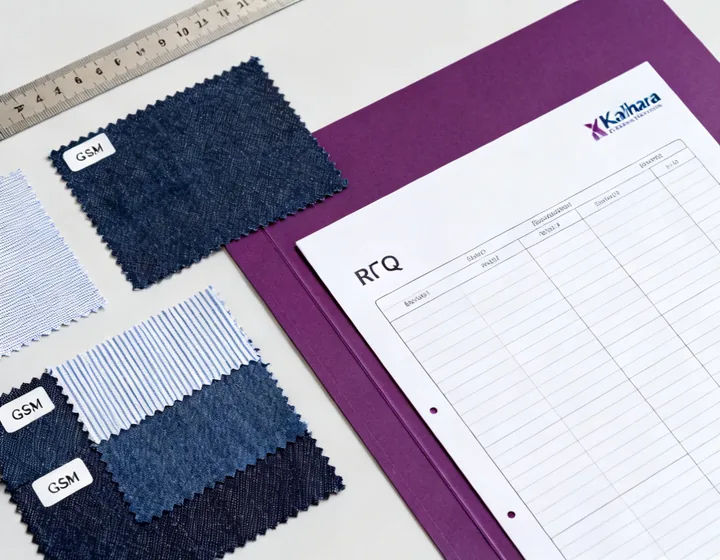
Prepare fields that a mill can answer without guessing the garment. Keep unknown values visible instead of converting a color name into a specification.
Apparel programs lose comparability when one quotation uses full width and another uses usable width after selvedge, needle lines or coating. Record the basis before asking for a unit price.
Share a retained swatch identity if one exists. A hangtag color name is not a lab-dip approval.
Inquiry families below are generic quotation configurations. They are not kaihara inventory and are not claimed as verified substitutes.
| Material | Use | Input needed |
|---|---|---|
| Woven apparel fabric | Bottoms, jackets, structured shirts | Weave, GSM, usable width, finish |
| Knitted apparel fabric | Jersey, rib, stretch garments | Gauge, stretch, recovery, shrinkage basis |
| Shirting and suiting fabric | Tailored shirts and suiting | Yarn character, handle, wrinkle and shade policy |
Open inquiry configurations to start a comparable request.
Bind swatch, lab dip or strike-off identity to the quoted article, date and reviewer. A retained piece is a target, not automatic bulk approval.
Ask for method, edition, specimen conditioning, laboratory and the exact material reference. A mill certificate title is not this desk's credential.
Record end use, composition, construction, GSM and destination before circulating a request.
Place quotations on the same width, finish, packaging and Incoterms basis.
Separate stock swatch, lab dip, strike-off and pre-production decisions in writing.
Define shade-lot, defect and document checks for the awarded article only.
| Use | Requirement to clarify |
|---|---|
| Denim-style bottoms and jackets | Indigo or sulfur route, selvedge vs overedge, shrinkage and wash plan |
| Everyday shirts and suiting | Handle, pilling, crease appearance and colorfastness method |
| Knits next to skin | Stretch, recovery, residual shrinkage and needle damage risk |
Before the RFQ
Qualified matching may include up to 3% support on the coordinated sourcing service. Eligibility applies to qualified business buyers and is confirmed after we review your product, quantity, destination, and sourcing requirements.
WeftAtlas Procurement compares factory wholesale quotations and procurement totals. No fixed saving, same-day discount, or inventory claim is offered.